
Russian online retail warehouses hit by deadly Ukrainian strikes
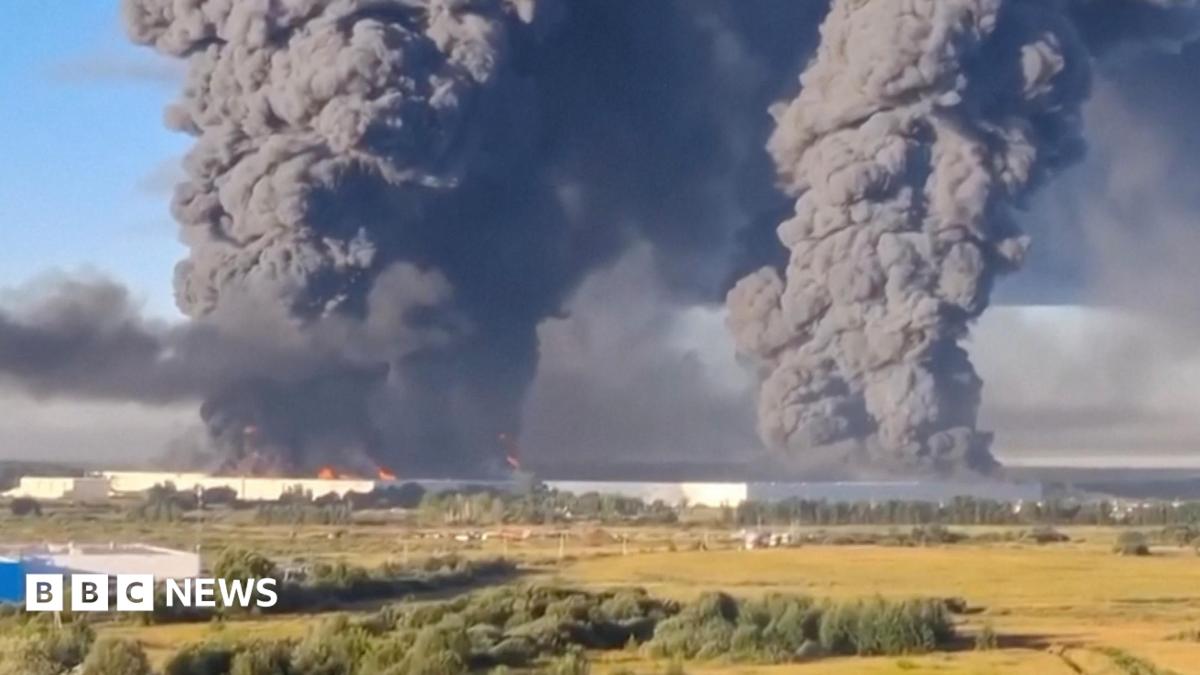
In a dramatic escalation, Ukrainian drone attacks have devastated key Russian logistics facilities, claiming at least eight lives and injuring dozens. The strikes, targeting vast warehouses belonging to Wildberries, Russia’s largest online retailer, mark a significant blow to the country’s supply infrastructure amidst ongoing hostilities.
Russian officials confirmed the fatal incidents. Seven individuals perished, and 25 sustained injuries at a sprawling warehouse in Tambov, located approximately 295 miles (475km) south-east of Moscow. A separate attack on another Wildberries facility in Elektrostal, within the Moscow region, left one dead and 37 wounded.
Ukrainian President Volodymyr Zelensky asserted that these operations targeted “major logistics facilities” crucial for supplying “sanctioned components for drone production and navigation equipment.” He further noted Ukrainian strikes across the Sea of Azov, the Black Sea, and Russian-annexed Crimea, underscoring the broad scope of these retaliatory actions.
Unverified, yet widely circulated, images from one strike scene depicted an inferno: immense plumes of black smoke billowed from a colossal logistics building, while scores of workers frantically fled towards a car park. Videos captured the terrifying onset of the attacks, showing explosions rattling facilities and walls disintegrating under the intense flames as injured staff desperately sought escape.
Targeting Russian Logistics Facilities: A Strategic Imperative
Zelensky framed Ukraine’s heightened offensive as a direct response to “Russian strikes on our civilian infrastructure and on our cities and communities,” referencing recent attacks that killed 14 people across Ukraine. The targeting of Wildberries, often likened to Russia’s Amazon and valued at an estimated $12.6 billion by a prominent financial news outlet in 2026, highlights the strategic intent.
Serhii Kuzan, chairman of the Ukrainian Security and Cooperation Centre, emphasized Wildberries’ critical role. He described it as a “vital component” of Russian logistics, alleging its platform was utilized by Russian volunteers to procure military-grade equipment, including walkie-talkies, body armour, and drone components. “The primary rationale for striking Wildberries’ warehouses is to disrupt Russian logistics and the supply of dual-use goods, critical electronics, sanctioned goods and the like to the Russian army and Russian arms manufacturers,” Kuzan stated.
The collateral damage, he added, could inflict a significant toll on the Russian economy and provoke a psychological effect on Russian society, potentially eroding support for the ongoing conflict. This mirrors tactics employed by Russia, which has targeted Ukrainian postal services and electronics distributors since the war’s outset.
Tatyana Kim, CEO of Wildberries and one of Russia’s first female billionaires, lamented a “terrible night” for both her company and the nation. Regional governors provided grim updates. Evgeniy Pervyshov of Tambov reported 28 drones intercepted, while confirming the seven immediate fatalities and 25 injuries, many from shrapnel. He deemed it the region’s “largest and most inhumane” attack.
In the Moscow region, Governor Andrei Vorobyov detailed the downing of 48 drones. A separate drone strike reportedly hit a Russian oil depot, causing “most serious consequences,” according to Vorobyov. Zelensky later corroborated a strike on “an oil facility.”
Ukraine has relentlessly intensified its long-range drone assaults on Russia’s vital energy infrastructure, leading to widespread fuel shortages. Kyiv claimed earlier this month that nearly 43% of Russia’s oil refining capacity had been “disabled” – a figure the BBC has not independently verified. These strikes against Russian oil and gas facilities are deemed legitimate targets by Ukraine, as Moscow heavily relies on fossil fuel exports to fund its full-scale invasion, which began in February 2022. Even Russian President Vladimir Putin made a rare acknowledgment in June that Ukrainian attacks had contributed to domestic fuel shortages, prompting a bill to boost supplies.