
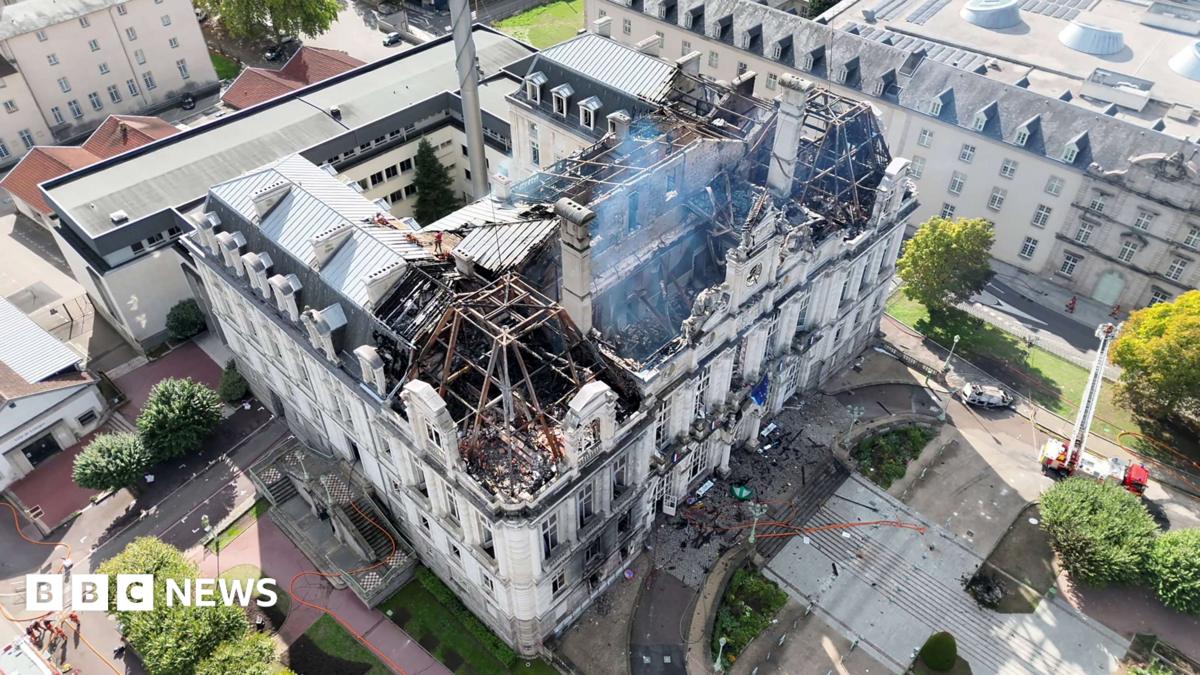
Suspect arrested after historic town hall set alight during disorder – French media
Introduction & Key Takeaways
France is currently grappling with a wave of civil unrest that has spiraled into significant destruction, culminating in the burning of a historic city hall in Limoges. The ongoing French riots, which began with student grievances, have now broadened into a massive movement fueled by economic frustration, cost of living pressures, and a perceived deterioration of public services. This article examines the current state of emergency, the political fallout, and the deeper structural issues destabilizing the nation.
- A suspect linked to far-left activism has been detained following the fire at a 19th-century landmark.
- Government officials admit that local law enforcement briefly lost control in several urban centers.
- The protests are drawing comparisons to the 2018 yellow vests movement, signaling a potential for prolonged instability.
- President Emmanuel Macron faces intense pressure as authorities weigh the potential necessity of declaring a national state of emergency.
Background & Context (What Just Happened?)
The unrest began last month as localized student demonstrations demanding improved educational infrastructure. However, the scope of these protests widened rapidly, drawing in trade unions and various activist groups united by shared economic anxieties. The situation reached a critical point over the weekend when rioters, many wearing masks and tactical gear, engaged in widespread looting and arson. The destruction of the city hall in Limoges, a building of significant cultural and historical importance, stands as a stark visual reminder of the severity of this disorder. According to recent reports, over 2,500 people have been apprehended, and approximately 1,000 police officers have sustained injuries, highlighting the intense, sometimes violent, nature of the confrontations on the streets.
Root Cause & Deep Dive Analysis (Why Did This Happen?)
At its core, the French riots are a manifestation of systemic fatigue. While the immediate trigger for some was the cost of living, the frustration stems from a long-standing disconnect between the government and the working class. Much like the societal pressures seen in other nations where political discourse has become polarized, the lack of effective dialogue has pushed citizens toward direct action. The government’s decision to deploy curfews in cities such as Paris, Marseille, and Lyon reflects an urgent, albeit reactive, attempt to restore order. Furthermore, the reliance on high-intensity crowd control tactics, such as the use of grenades, has only deepened the divide between the state and the populace. For a detailed perspective on how such governance challenges mirror broader global trends, one might observe the difficulties faced by modern governments when trying to balance reform with public dissatisfaction.
Strategic Implications & Future Impact
The geopolitical and economic implications for France are substantial. With thousands of businesses impacted by looting and property damage, the national economy faces a tangible threat, particularly during an inflationary period. Strategically, the failure of security apparatuses to predict or contain the violence early has led to internal calls for resignations, putting the administration in a defensive posture. President Macron must now navigate a narrow path, as his government risks further alienating the public if they impose a state of emergency that curtails civil liberties. Simultaneously, the mobilization for a second wave of protests this coming weekend suggests that the volatility is unlikely to abate soon. International observers are keeping a close watch on the situation, comparing these events to the historic civil unrest cycles that periodically reshape the French political landscape.
Conclusion & What to Watch Next
As the country prepares for the next phase of demonstrations, the primary focus will remain on the government’s ability to maintain public order without triggering further escalation. The French riots have evolved from a protest into a profound test of the democratic institutions governing the country. Future developments will likely center on whether the proposed “Act II” of the protests will seek to re-engage with diplomatic solutions or continue the path of confrontational protest. Stakeholders must monitor the upcoming weekend as a defining moment for the resilience of local and national governance.