
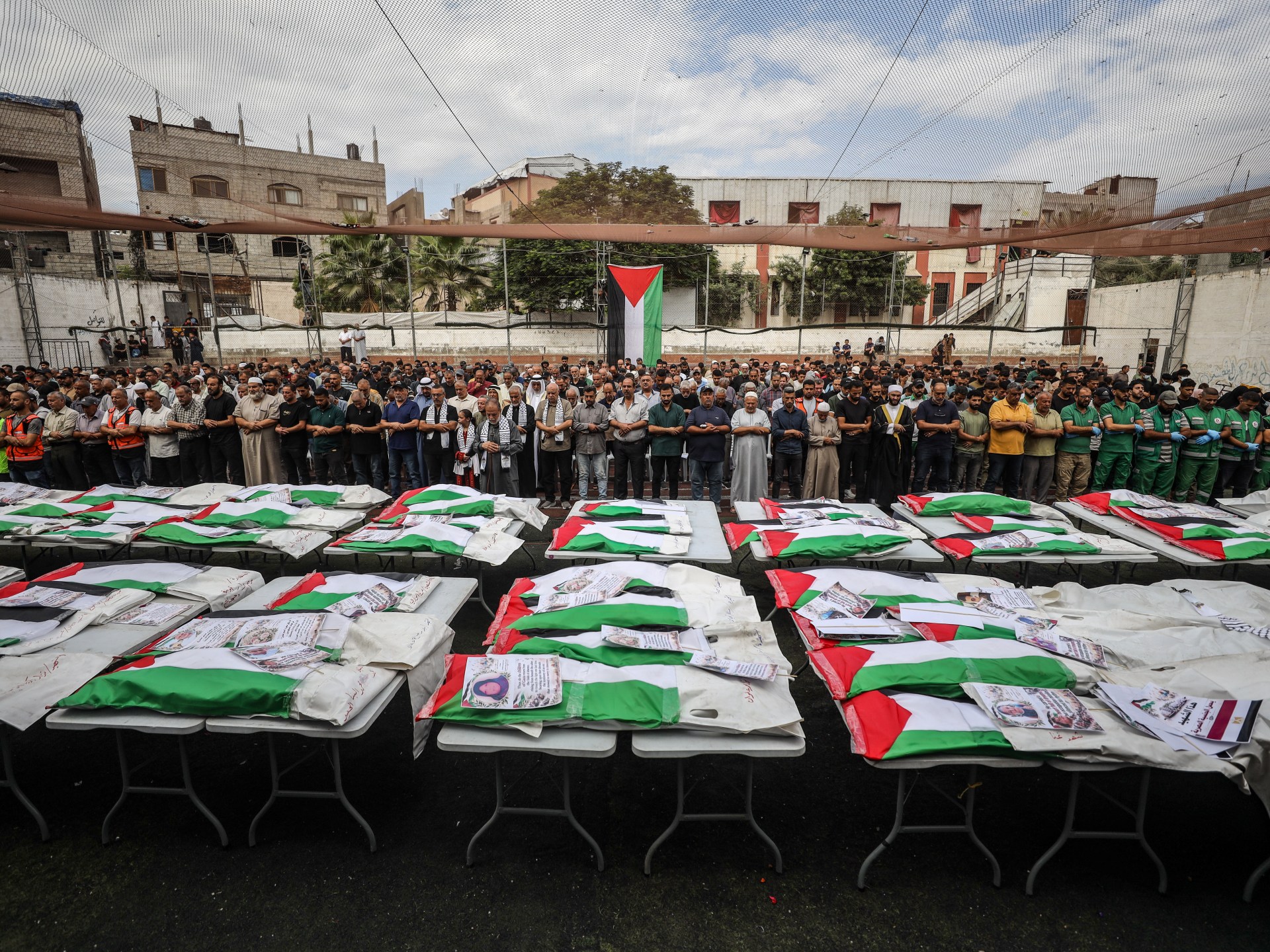
Funeral held for 75 Palestinians after remains recovered from Gaza ruins
Introduction & Key Takeaways
The recent recovery and burial of 75 Palestinian remains in Gaza City marks yet another harrowing chapter in the ongoing conflict, shedding light on the persistent challenges of post-conflict recovery and the staggering scale of destruction. As families in the Daraj neighbourhood lay their loved ones to rest, the global community is once again reminded of the severe humanitarian crisis unfolding in the region. This Gaza rubble recovery effort is a poignant symbol of the long-term trauma faced by civilians caught in the crossfire.
- The remains of 75 individuals, primarily women and children, were recovered from destroyed structures in Daraj.
- The Civil Defence estimates that approximately 8,000 bodies remain trapped beneath debris across the Gaza Strip.
- Severe lack of heavy machinery and specialized equipment continues to impede recovery operations, turning potential rescue missions into long-term retrieval challenges.
- The death toll in the territory has reached critical levels, with official reports suggesting over 74,000 casualties since the conflict escalated in 2023.
Background & Context (What Just Happened?)
On a somber Sunday morning, residents gathered at the Sheikh Radwan Cemetery to perform mass funeral rites for 75 Palestinians. The remains were collected over several weeks of painstaking manual search efforts in the Daraj district. Many of these individuals were trapped when their homes were struck during the initial months of the conflict. This event is not an isolated incident but a continuation of the grim reality that has defined life in the territory for three years. Similar scenes of distress have been documented globally, mirroring the impact of civil unrest and urban destruction on civilian populations.
Root Cause & Deep Dive Analysis (Why Did This Happen?)
The primary driver behind the difficulty in recovering victims is the sheer scale of urban devastation. According to data provided by UNRWA, approximately 200,000 buildings have been damaged or completely obliterated. This massive destruction has created an unstable landscape where recovery teams operate without the necessary heavy machinery required to shift concrete slabs safely. The Gaza rubble recovery is hindered by supply chain blockages and a systematic lack of infrastructure, which prevents the entry of excavators, cranes, and advanced search equipment.
Furthermore, the demographics of the victims reflect the indiscriminate nature of the strikes that hit residential blocks. Local reports indicate that the majority of those recovered were families, including displaced persons who had sought shelter in what they deemed to be safer dwellings. This highlights the vulnerability of domestic spaces in an active war zone.
Strategic Implications & Future Impact (What Does This Mean Globally?)
The long-term implications of these recovery efforts are profound. Beyond the immediate grief, the presence of thousands of bodies beneath the rubble poses significant public health risks, including the potential for disease outbreaks and soil contamination. Strategically, this creates a monumental task for future reconstruction projects. Before any urban development or rehabilitation can occur, a massive demining and search-and-recovery operation must be completed. The psychological impact on the survivors, who are forced to witness these continuous retrievals, cannot be overstated, as it perpetuates a cycle of trauma that will require decades of support to mitigate. We have previously discussed how public crises and social movements often leave deep, generational scars on society.
Conclusion & What to Watch Next
The recovery of these 75 individuals is a somber reminder of the thousands still waiting to be found. As the Civil Defence continues its dangerous work, the international community faces pressure to provide more support for infrastructure retrieval. Observers should monitor whether aid organizations can successfully advocate for the delivery of specialized machinery. The Gaza rubble recovery remains a critical indicator of the humanitarian situation, and the ability to eventually clear these sites will be the first step in the long, uncertain process of restoring life to the devastated neighbourhoods of Gaza City.