
Hashim Moosa Killed: How 3 Years Of Manhunt Decimated LeT’s Key Field Network In J&K
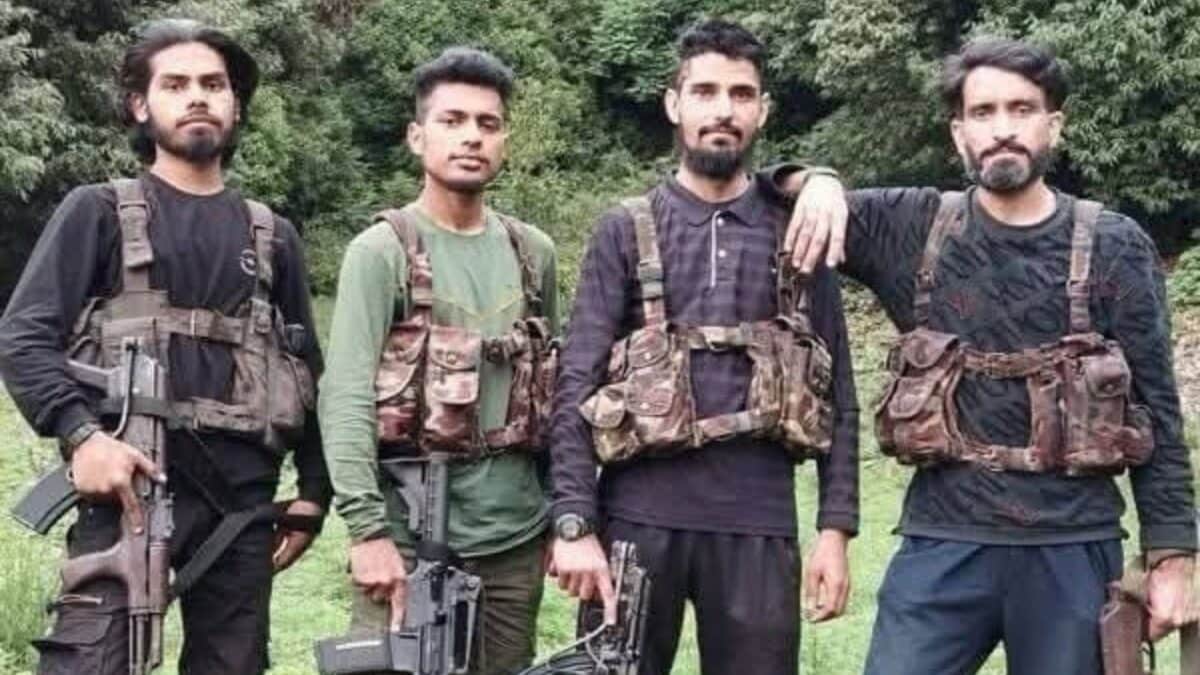
After a relentless three-year manhunt that stretched across the unforgiving, rugged terrain of the Pir Panjal range, the trail for one of the most elusive militant commanders has finally reached its conclusion. Security forces confirmed that Hashim Moosa, a high-value Lashkar-e-Taiba (LeT) operative, was killed during a precise joint operation in the Yousmarg area of Budgam. His death represents a pivotal moment in the ongoing counter-insurgency efforts within Jammu and Kashmir.
The elimination of this specific militant is not just a tactical victory. It marks the systematic dismantling of a terror cell that had plagued the region for years. Moosa, identified by security agencies as a Pakistani national with specialized military training, was widely believed to be a former member of Pakistan’s Special Service Group. This military background provided him with the lethal capability to navigate dense forests and execute rapid, long-range strikes before vanishing into the wilderness.
The Dismantling of the Hashim Moosa Network
For security analysts, the neutralization of Hashim Moosa is the final piece of a three-year strategic puzzle. Moosa did not operate alone. He functioned as the commander of a four-member LeT unit that specialized in cross-border infiltration and high-impact ambushes. Intelligence agencies had been tracking the group meticulously, noting that their influence had touched some of the most sensitive corridors near the Line of Control.
One by one, the other members of this four-man group were accounted for by security forces:
- Junaid Ahmed Bhat was neutralized in late 2024.
- Sulaiman Shah followed in July 2025.
- Yasir was eliminated in early September of this year.
With Moosa now confirmed dead, the entire cell is effectively defunct. This operational success is significant, as it wipes out the publicly identified senior field leadership of this particular network. While the broader organization behind these individuals continues to maintain infrastructure elsewhere, the immediate threat posed by this specific group has been neutralized, providing a rare but vital respite for the region.
This is part of a larger, ongoing security situation in the area, much like how previous disruptions have affected local stability, such as recent reports regarding volatile incidents involving armed personnel in J&K. The meticulous nature of this operation highlights how modern surveillance and human intelligence have drastically changed the game in the fight against infiltration.
The trail of destruction attributed to this group includes the October 2021 attacks in Poonch, the 2023 ambush at Bhatta Durriyan, and the tragic 2025 attack in Pahalgam, which resulted in 26 fatalities. By successfully tracking Moosa from the Poonch-Rajouri forests to his final confrontation in Budgam, the Indian Army, along with the J&K Police and CRPF, have demonstrated a new standard in operational coordination.
However, the security establishment remains cautious. Experts warn that while the death of Hashim Moosa is a major setback for the LeT, the challenge of preventing new infiltrations is perpetual. The vacuum left by his departure will likely lead to attempts by handlers to push new commanders across the border. For now, though, the security forces have successfully closed a dark chapter, proving that even the most elusive targets cannot stay hidden forever in the face of persistent pressure and superior intelligence.