
Congress’s Next Headache? Harish Rawat Defies Top Brass’ Yatra Warning, Tests Uttarakhand Game Plan
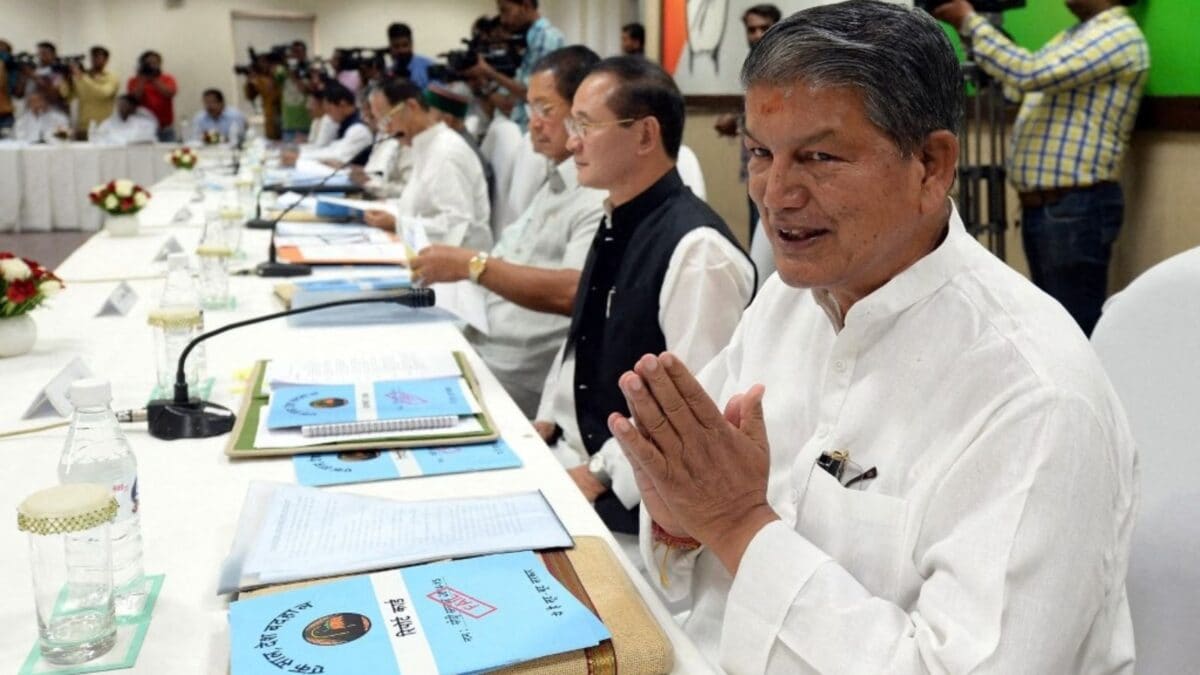
In a move that has sent shockwaves through the political corridors of Dehradun, veteran leader Harish Rawat is openly challenging the established party hierarchy. As assembly elections in the Himalayan state approach early next year, Harish Rawat defies Congress high command, choosing to push forward with his solo political outreach rather than aligning with the central leadership’s mandate. This public discord arrives at a precarious moment for the party, which is desperate to present a united front against its opponents.
The tension reached a boiling point when Congress general secretary KC Venugopal reportedly summoned the septuagenarian leader to New Delhi. Sources indicate that Rawat was advised to immediately cease his independent political activities and strictly adhere to the established party line. Despite these stern warnings, the veteran politician shows no signs of backing down. He has instead doubled down on his efforts, continuing the ‘Dhanyawad evam Jansamvad Yatra’ that has drawn criticism from within his own ranks.
Internal Friction and the Harish Rawat Crisis
The rift was formally acknowledged when Kumari Selja, the party’s state in-charge, penned a pointed letter to Rawat on October 1. In her correspondence, which was copied to the high command, she lamented that the yatra was being executed without any prior consultation with the Pradesh Congress Committee president or herself. For observers of Indian politics, this internal struggle echoes themes of institutional accountability, where local power bases often clash with centralized directives.
Rawat, ever the populist, maintains that his actions are driven by a need to connect directly with the people of Devbhoomi. On social media, he framed his defiance as a crusade for the state’s self-respect. His determination to proceed with the second leg of his program in Udham Singh Nagar suggests that he is testing his own political capital within the state, calculating that his base is loyal enough to weather the dissatisfaction of party bosses.
The Legal and Political Minefield
Compounding the political headache for the Congress is the looming shadow of the Enforcement Directorate. The agency has recently registered a case against a former aide of Rawat, citing an alleged recruitment racket that traces back to 2016. This development has provided fresh ammunition for political rivals, forcing Rawat to balance his campaign with the demands of legal scrutiny. For those interested in the broader context of political integrity and legal oversight, official reports on financial investigations remain a vital area of public concern.
The situation remains volatile, particularly as Rawat recently appeared at the ED office accompanied by supporters, creating a spectacle that party leaders fear could derail their electoral narrative. Yet, analysts warn that sidelining a figure of Rawat’s stature is a dangerous gamble. Many current party office-holders in the region are his proteges, having been groomed by him over decades of political struggle. His influence is not merely organizational; it is deeply personal and historical.
As the countdown to the election begins, the central leadership must now decide whether to enforce discipline at the cost of alienating a core constituency or tolerate the insubordination of a veteran who believes he knows the path to victory better than those in Delhi. Whether this gamble by Harish Rawat will lead to a seat at the table or a total alienation from the party remains to be seen. In the meantime, the electorate watches closely, wondering if the Congress can manage its own house before it asks for their votes.