
Can Pakistan-administered Kashmir’s election overcome a violent summer?
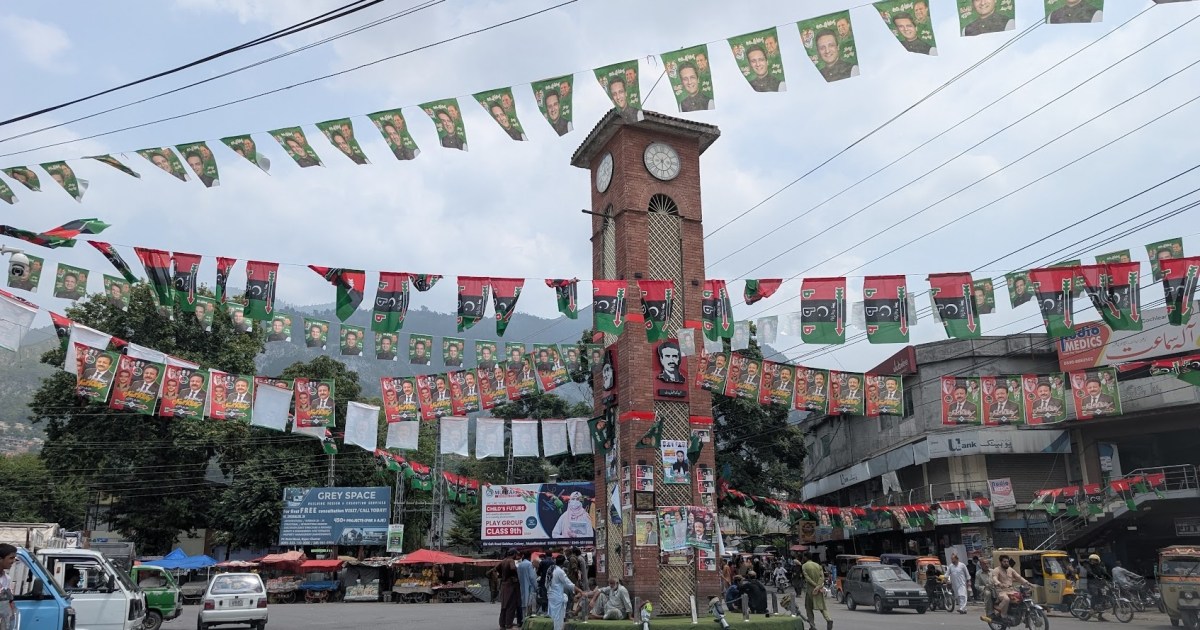
Muzaffarabad, Pakistan-administered Kashmir shimmers under a blanket of densely strung election bunting. Yet, beneath the festive veneer, an unsettling current runs deep. After months of simmering protests, a deadly crackdown, and widespread societal disruption, the territory braces for a contentious Kashmir election, its outcome shrouded in profound uncertainty.
From the green tigers of Pakistan Muslim League-Nawaz (PMLN) to the ubiquitous red and black flags of the Pakistan Peoples Party (PPP), political fervor paints the capital. Lal Chowk, a square built in homage to its namesake across the Line of Control, pulsates with activity. On the surface, it’s a city gearing up for democracy. But Muzaffarabad is also a city grappling with crisis.
Navigating the Contentious Kashmir Election
Since early June, this picturesque region has been rocked by weeks of brutal protests and sit-ins, claiming dozens of lives. These demonstrations are intricately linked to the regional provincial legislature’s elections, originally slated for July 27. Now, in a bid to quell tensions, voting has been staggered across three separate days. Mirpur division proceeds on July 27, while Poonch, the epicenter of the unrest, will cast ballots on August 10. Muzaffarabad and 12 other crucial seats, reserved for refugees from Indian-administered Kashmir now residing in Pakistan, are set for August 2, according to Chief Election Commissioner Justice (retired) Ghulam Mustafa Mughal.
These reserved refugee seats lie at the very heart of the agitation. Protesters demand their abolition, arguing that only current residents of Pakistan-administered Kashmir should hold legislative power. It is against this backdrop of tension that the region prepares to vote.
A 60-year-old driver, his face weathered, spoke of the Jammu Kashmir Joint Awami Action Committee (JKJAAC), known as JAAC, the movement that has utterly dominated local politics. “I have never joined them,” he admitted, “but my sympathies are with them. They are fighting for my rights.” Yet, when it came to the ballot, his conviction wavered. He would not vote. “The person you want to vote for isn’t allowed on the ballot,” he lamented, referencing JAAC’s ban in June. “A vote is a responsibility, and it should only be given to those who deserve it.”
This Kashmir election, however, is being contested by parties on the ballot, even as a powerful, banned entity casts a long shadow. The region’s semi-autonomous government, home to over four million people, holds its own president, prime minister, and Supreme Court. Chief Election Commissioner Mughal acknowledged “security-related concern” only in Poonch. Deputy Commissioner Munir Qureshi of Muzaffarabad points to bustling markets and active campaigns as signs of normalcy. He stated, “It is not our job to tell people to go and vote. If they decide, for whatever reason, not to show up, it is their democratic right.”
But the elephant in the room remains: the proscribed JAAC, whose members’ nomination papers were rejected. Its leadership actively calls for a boycott. The question looms: will this election be seen as legitimate by the very people it purports to serve?
The protests, now in their second month across Poonch division, trace back over two years to demands for subsidised wheat and cheaper electricity. JAAC formed in 2023 with ten core demands. By October 2024, the AJK government signed a charter, ostensibly resolving most concerns. Yet, by June, the focus dramatically shifted to the 12 assembly seats reserved for Kashmiri refugees, a move JAAC claims grants outsiders undue influence.
On June 5, mere weeks before the election, the AJK government declared JAAC a proscribed organization under anti-terrorism laws. Arrests of dozens, including leader Shaukat Nawaz Mir, followed. What unfolded was the deadliest period of unrest in years. Conservative estimates place the death toll near 30. Access to Poonch was blocked, supplies disrupted, and banks closed. Mobile and internet services were suspended across most of the territory.
The Election Commission itself faces scrutiny. Sardar Amanullah, a JAAC member, reported his independent nomination papers were rejected. “I don’t think these are free and fair elections,” he said. Chief Election Commissioner Mughal countered that only a few JAAC-affiliated individuals were rejected due to their names appearing on police reports and Pakistan’s anti-terrorism watchlist. Abid Shaheen, a JAAC core committee member, starkly called the vote “a selection, not an election.”
These 12 reserved seats for refugees from Jammu and the Kashmir Valley, enshrined in the 1974 Interim Constitution, have swollen from 405,000 voters in 2021 to nearly 439,000 this year. JAAC argues this amplifies their influence beyond original intent. Political analyst Zulfiqar Ali noted, “Across all the governments AJK has had, these 12 seats have played no significant role in actually making or breaking a government.” Instead, he suggests, power has consistently rested with native AJK politicians or whichever party holds federal power in Islamabad.
Islamabad, it appears, has little appetite for revisiting these seats. Defence Minister Khawaja Asif warned last month that abolishing them under protest pressure would “sabotage the electoral process.”
Campaigning for parties on the ballot was largely stifled throughout June. Iftikhar Gillani, a PMLN candidate, told Al Jazeera, “The campaign only picked up in the last few days.” He believes many Kashmiris differentiate between supporting JAAC and participating in the democratic process. However, he concedes a significant portion of the population, committed to JAAC, may well abstain.
A young PMLN activist described a campaign forced offline by the internet shutdown, relying on door-to-door canvassing and loudspeakers. He also spoke of unprecedented social divisions fueled by the protests: “Families are divided over this. Those who don’t support JAAC are being called supporters of our oppressors.” PPP candidate Sardar Mukhtar acknowledged a somber campaign environment, anticipating a lower turnout.
PPP Chairman Bilawal Bhutto Zardari recently proposed a Truth and Reconciliation Commission to address grievances, urging JAAC to suspend protests and the state to halt further action. He is scheduled to address a public rally on July 24.
For political analyst Ali, the fundamental issue isn’t the vote itself, but years of unfulfilled government commitments to JAAC, including promises of devolved development budgets and ending political perks. “People will vote,” he predicted, “because the entire system is designed in a certain way, tying government jobs and small favours to elected representatives. But it will not resolve people’s fury and anger.”
Ershad Mahmud, a Canada-based researcher, believes the election’s legitimacy is undermined by the absence of major democratic forces like PTI and JAAC. He expects many voters will stay home. “The mental distance [from Muzaffarabad to Islamabad] is now 1,000km,” he starkly remarked. Meanwhile, others like property dealer Muhammad Ramzan, initially a JAAC supporter, grew disillusioned when the movement shifted focus to the 12 refugee seats. He plans to vote but expects a lower turnout, especially among younger, committed JAAC followers. He quietly expressed his fear: “I fear that things will go bad.”
The very legitimacy of the Kashmir election hangs in the balance, a crucial moment for a region yearning for stability amidst profound unrest and unresolved grievances. For deeper insights into global affairs, consult reliable international reporting.