
Punjab CM Lists Projects Honouring Bhagat Singh, Says AAP Govt Working To Fulfil His Dreams
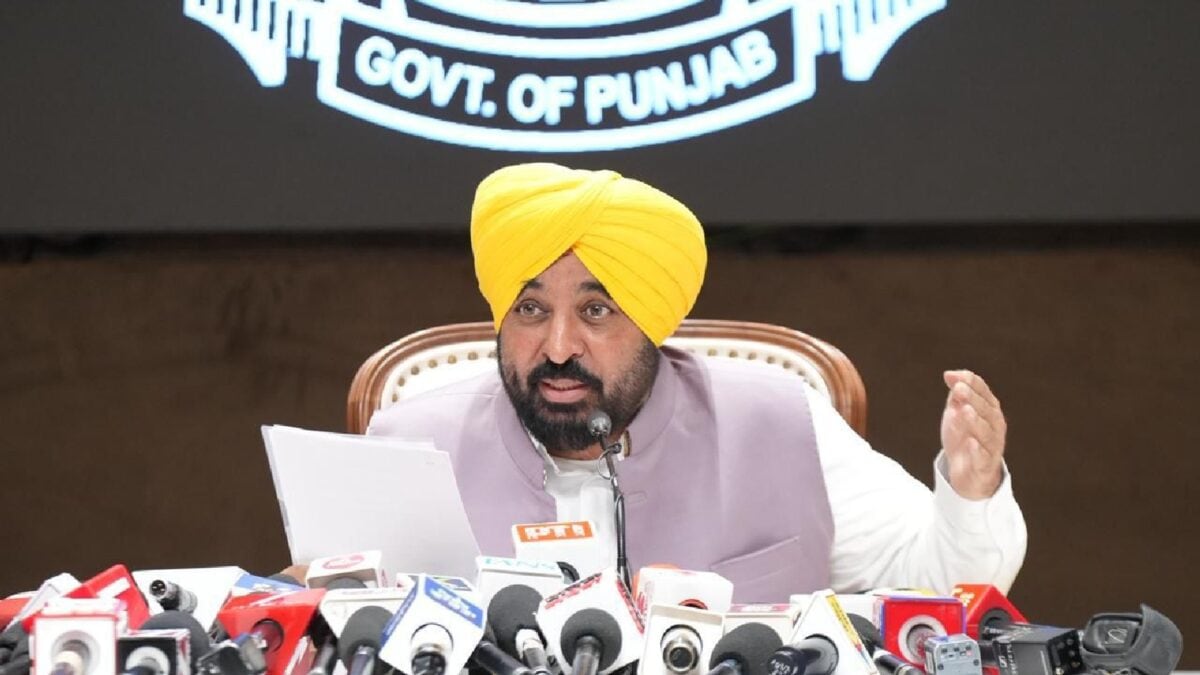
Punjab Chief Minister Bhagwant Mann has reaffirmed his administration’s commitment to upholding the ideals of the revolutionary hero Bhagat Singh, pledging to transform the state into a model of equity, justice, and progress. During the Jashan-e-Inquilab event held at Punjab Agricultural University in Ludhiana, Mann detailed a series of state-led projects designed to honor the Bhagat Singh legacy and immortalize his contributions to India’s freedom struggle. By focusing on cultural preservation and infrastructure, the government aims to bridge the gap between historic sacrifices and modern governance.
Among the significant initiatives highlighted by the Chief Minister are the formal renaming of the Mohali airport in honor of the martyr, the installation of a towering 30-foot statue in Mohali, and the institutional decision to display portraits of both Bhagat Singh and Dr. B.R. Ambedkar within government offices across the state. These symbolic gestures are intended to serve as constant reminders of the foundational values that shaped the nation, as discussed in detail during coverage of political debates in regional assemblies regarding historical figures.
Preserving the Bhagat Singh Legacy
Central to these efforts is the development of the Rs 52-crore Shaheed-e-Azam Bhagat Singh Heritage Complex located in Khatkar Kalan. This project is far more than a monument; it is being crafted as a comprehensive center for learning and cultural tourism. The complex is designed to offer a contemporary interpretation of the revolutionary leader’s life, incorporating an ancestral house, a meticulously recreated village setting, and an interactive courtroom experience that transports visitors back to a pivotal era in history.
The facility will also feature modern amenities, including high-tech audio-visual systems, a dedicated auditorium, and artistic installations such as murals and sculptures. By integrating these elements, the government hopes to provide an immersive educational experience for younger generations who may not have otherwise engaged with the depth of the martyr’s philosophy. This initiative reflects a broader push to maintain a connection to heritage, similar to how local governance prioritizes public infrastructure in reports like the analysis on changing regional climate and conditions.
Modern Challenges and Revolutionary Ideals
Beyond the construction of monuments, Mann emphasized that the true fulfillment of the freedom fighter’s vision lies in addressing the systemic issues that continue to plague contemporary society. He noted that the fight for independence was not intended to result in a nation stifled by corruption, nepotism, or deep-seated inequality. The Chief Minister urged the youth of Punjab to look beyond the pageantry of commemorative events and embrace the intellectual rigor and selfless service that defined the revolutionary leader’s life.
The administration’s focus on education, welfare, and environmental protection, specifically regarding the state’s water resources, is being framed as an extension of this historical responsibility. By prioritizing these sectors, the government asserts that it is actively working to dismantle the barriers to dignity and equal opportunity. This vision for a more prosperous and equitable Punjab serves as the cornerstone of the state’s current policy trajectory, with Mann maintaining that no effort will be spared to ensure that the sacrifices of the past are not forgotten amidst the modernization of the present. The initiative stands as a testament to the enduring power of the Bhagat Singh legacy in shaping the political and social identity of the state.