
‘Every Mother And Sister Is Brand Ambassador’: Mann Govt Distributes ₹3,824.87 Crore To 75 Lakh Women
The landscape of social welfare in India continues to shift as state governments experiment with direct benefit transfer programs. Recently, Punjab Chief Minister Bhagwant Singh Mann announced a significant milestone for the Mawan Dheeyan Satkar Yojna, a flagship initiative designed to foster financial independence among the state’s female population. With a total of ₹3,824.87 crore successfully disbursed, the program aims to redefine the socioeconomic standing of women across the region. By centering the initiative on dignity and autonomy, the government hopes to create a lasting ripple effect that empowers households and promotes gender equity.
The scale of this operation is substantial, reaching approximately 75 lakh registered women. This systematic transfer of funds is more than just a financial handout; it serves as a cornerstone for the administration’s broader goals of social upliftment. As noted in recent reports regarding ongoing development efforts in Punjab, the administration is focusing heavily on structural changes that aim to fulfill long-standing public expectations. By providing direct monetary assistance, the government hopes to lessen the financial burden on individual women, thereby granting them more agency in their daily lives and economic decisions.
Understanding the Mawan Dheeyan Satkar Yojna Structure
The program, which allocates ₹9,300 crore in its total budget, features a tiered distribution system. Standard eligible women receive a sum of ₹1,000, whereas women belonging to Scheduled Caste communities are granted ₹1,500. This deliberate differentiation is part of a strategy to support marginalized groups who often face the greatest systemic barriers to financial stability. According to government data, 97 percent of women in the state are technically eligible for the scheme, and the administration has set an ambitious target of reaching one crore beneficiaries in total.
The role of technology cannot be overstated in this rollout. Beneficiaries receive real-time notifications on their mobile devices, ensuring transparency in the disbursement process. This digital-first approach mimics global trends seen in robust welfare systems where the efficacy of cash transfers is measured by the reduction of bureaucratic friction and the speed of delivery to the end-user.
Despite the program’s successes, critics and observers continue to watch the implementation phase closely. The state government remains under pressure to maintain fiscal health while expanding its social security net. CM Mann has explicitly stated that no eligible individual will be excluded, characterizing the commitment as a primary duty of his office. This assurance is vital for maintaining public trust, particularly in a region where economic policy often intersects with complex political narratives.
Social Impact and Public Engagement
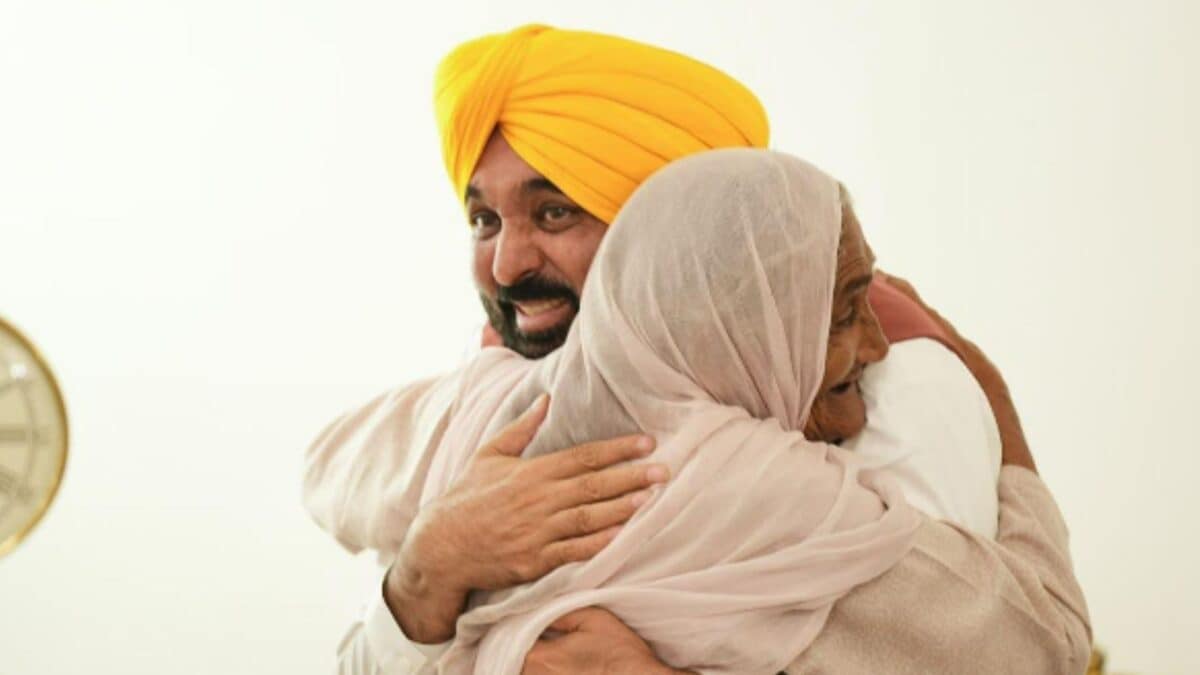
Beyond the spreadsheets and bank balances, the Mawan Dheeyan Satkar Yojna has fostered moments of genuine human connection. One instance that captured public attention involved an emotional encounter between the Chief Minister and Gurmail Kaur, a local beneficiary whose positive reception of the scheme went viral on social media. Such interactions underscore the symbolic importance of the initiative; for many families, these funds represent the first time they have held direct control over independent income.
The broader goal for the administration is clear: transforming the way society views gender roles. By labelling every mother and sister as a brand ambassador, the government is attempting to mainstream the discourse around women’s participation in the economy. Whether this policy will translate into long-term changes in employment participation or educational outcomes remains to be seen. However, as the state moves forward, the focus on the Mawan Dheeyan Satkar Yojna suggests that gender-specific social welfare is likely to remain a high priority on the legislative agenda.
As the administration approaches its next review cycle, officials are expected to analyze the impact of these transfers on local consumption patterns and household savings. The success of the scheme will likely be judged by its ability to provide not just immediate relief, but a pathway to sustained financial participation for women in both rural and urban sectors of Punjab.